
BRIAM / E+ Program
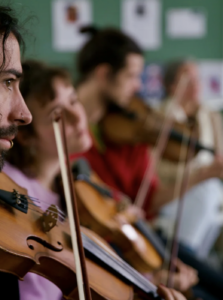
BRIAM Erasmus+ Project Successfully Completed: A Living Bridge Through Music
We are delighted to announce the successful completion of the BRIAM – Cultural Bridges Across the Mediterranean Erasmus+ project, a collaboration between organisations in Spain, Greece, Belgium and Turkey.
The project was built on a simple yet powerful idea: that the shared musical heritage of the Mediterranean can serve as a tool for intercultural dialogue, education and connection. Over its duration, BRIAM brought together musicians, educators and adult learners in a rich process of exchange, combining artistic practice with non-formal education.
 Brussels Seminar
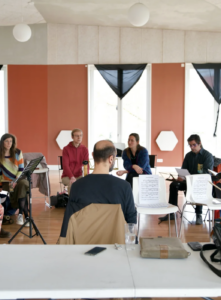
One of the most important milestones of the project was the first in-person seminar and coordination meeting in Brussels. This gathering marked the first physical meeting of the partnership and set the tone for the project’s collaborative spirit.
Beyond coordination, the seminar opened to a wider audience, offering workshops and presentations on Mediterranean modal music. It created a space where participants from different backgrounds could meet, play, and reflect together — a true embodiment of the project’s intercultural objectives.
Modal Music Talks: A Shared Learning Space
At the core of BRIAM was the online seminar series “Modal Music Talks”, which brought together musicians, researchers and educators from across the partner countries. A total of 200+ participants engaged in these sessions, exploring the common roots of Mediterranean musical traditions through a participatory and inclusive learning process . These seminars became more than lectures: they were spaces of dialogue, exchange and collective discovery, connecting people across borders through sound and knowledge. The video remain freely accesible on this youtube playlist
 An Open Archive for Traditional Music from Greece
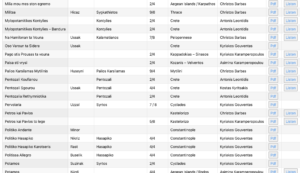
One of the most valuable outcomes of the project is the creation of an open-access digital archive, including:
- Musical scores
- Recordings and videos
- Educational materials
This archive reflects the collaborative work of the project and remains freely accessible to musicians, educators and researchers worldwide.
A particularly important contribution came from the team of transcribers, whose work made it possible to document and share this repertoire in a structured and usable way.
We would like to warmly thank:
Kyriakos Gouventas, Kyriakos Karamperopoulos, Christos Barbas, Asimina Karamperopoulou, Kostas Kyritsakis, Antonis Leontidis, Stavros Kentepozidis, Elias Andreoulakis, Haris Sarris, Victoria Taskou, Stelios Kasapakis, Dimos Vougioukas, A. Katsigiannis, and all those who contributed to this effort.
Their work is essential not only for this project, but for the preservation and transmission of this shared musical heritage. You access the musical archive here.
A Project That Continues
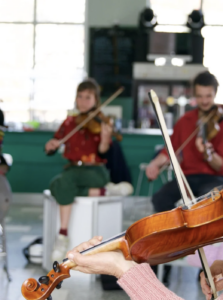
BRIAM does not end with the formal conclusion of the programme. The Estoudiantina of Cyclades, created within the project, continues as an independent cultural association, ensuring the sustainability of its artistic and educational vision . At the same time, the digital archive remains open and active. We hope that this resource will continue to grow, with new contributions from musicians, educators and researchers who wish to participate in this collective process of knowledge sharing. BRIAM has shown that music can act as a bridge — not only between traditions, but between people.We invite every one to explore the results, use the materials, and contribute to the future development of this shared space.
Access the full archive and project results:
https://estoudiantinacyclades.com/briam-erasmus-project-results/